
Quick Fact: A borrower with a poor CIBIL score paid ₹8.97 lakh extra interest on a ₹35 lakh home loan over 20 years — compared to someone with a score above 750. Same bank. Same loan. Same tenure.
What Exactly is a CIBIL Score?
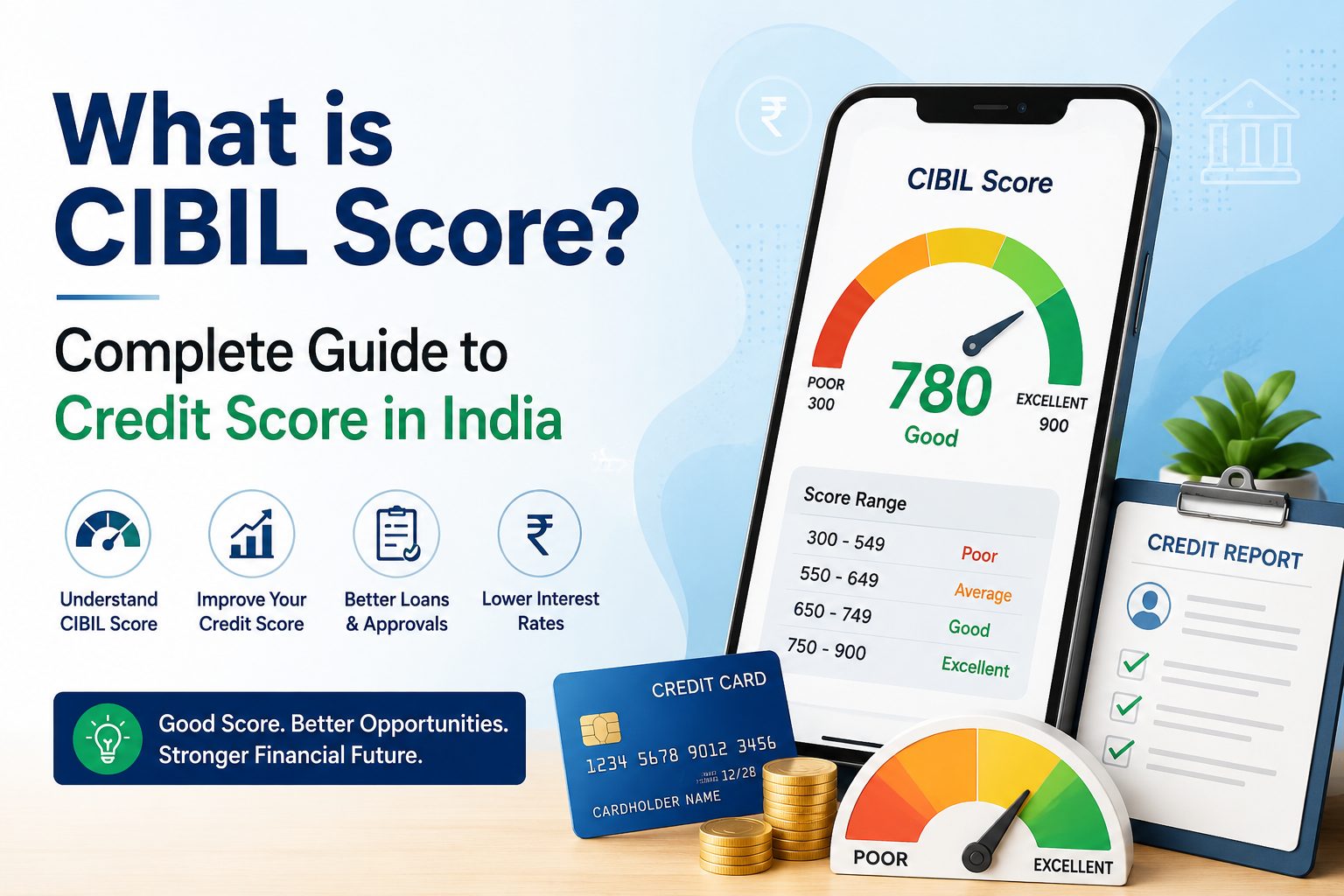
A CIBIL score is a three-digit number between 300 and 900 that represents your creditworthiness — how reliably you have borrowed and repaid money in the past. The higher the number, the more trustworthy you appear to lenders.
The name comes from TransUnion CIBIL — the Credit Information Bureau of India Limited — one of four credit bureaus licensed by the Reserve Bank of India. Every time you take a loan, pay an EMI, use a credit card, or miss a payment, that information gets reported to CIBIL by your bank. When you apply for any new credit, the lender checks this score first.
Think of it like a report card for your financial life. Instead of subjects, it tracks your loan repayments and credit behaviour. Instead of affecting college admissions, it affects your access to credit, the interest rates you pay, and ultimately your long-term wealth.
There are also two special cases. NH (No History) means you have never taken a loan or credit card — CIBIL has no data on you. NA (Not Applicable) is similar. Both are treated cautiously by most lenders. Having no credit history is not a safe position — it is simply an unknown one.
Why Your CIBIL Score Matters More Than You Think
Your CIBIL score affects your financial life far beyond just getting a loan approved or rejected. Here is the full picture with real numbers.
The Home Loan Reality
This is where the stakes are highest. A home loan is the biggest financial commitment most Indians make. Look at what a difference in CIBIL score actually costs you:
| CIBIL Score | Loan Amount | Interest Rate | Total Interest (20 yrs) |
|---|---|---|---|
| 750+ | ₹35 Lakh | 8.50% | ₹37.96 Lakh |
| 650–699 | ₹35 Lakh | 10.10% | ₹46.93 Lakh |
The borrower with a weaker score pays ₹8.97 lakh more in total interest on the same loan. Same bank. Same amount. Same 20 years. The only difference is the CIBIL score. This is what actually happens in Indian banks every day.
Personal Loans and Credit Cards
Personal loans are unsecured — the bank has no collateral if you default. So they rely almost entirely on your CIBIL score. A score below 700 can mean instant rejection for most credit card applications. Personal loan interest rates for someone below 650 can be 18–24% annually, versus 10–12% for someone above 750.
Speed and Pre-Approvals
Those instant "You are pre-approved for ₹5 lakh personal loan" messages are based almost entirely on CIBIL score. A score above 750 means minimal paperwork, processing within hours, near-guaranteed approval. A poor score means longer verification, more documents, more delays — and usually rejection anyway.
How is Your CIBIL Score Calculated?
CIBIL does not publish its exact formula, but the broad factors are well-documented:
| Factor | Weight | What It Means |
|---|---|---|
| Payment History | ~30% | Whether you pay EMIs and credit card bills on time. One missed payment can drop your score by up to 100 points immediately. |
| Credit Utilisation | ~25% | How much of your credit card limit you use. Using more than 30% signals financial stress to lenders. |
| Credit History Length | ~20% | How long you have had credit accounts. Older accounts with good history strengthen your score. |
| Credit Mix | ~15% | A balance of secured loans (home, car) and unsecured credit (cards, personal loans) is viewed positively. |
| New Enquiries | ~10% | Each loan application triggers a hard enquiry. Multiple applications in a short period look risky to lenders. |
The core principle: pay on time every month, keep utilisation below 30%, maintain old accounts, and do not apply for credit frantically. Everything else follows from these four habits.
8 Things That Damage Your CIBIL Score
- Missing even one EMI payment — drops your score by 50–100 points immediately. The damage stays on your report for years.
- Paying only the minimum on credit cards — the remaining balance accrues 36–42% annual interest AND signals financial stress to lenders.
- Using more than 30% of your credit limit — a ₹1 lakh limit with ₹70,000+ spent consistently is a serious red flag.
- Loan settlement instead of full repayment — "Settled" on your report is nearly as damaging as a default. Always repay in full.
- Applying to multiple lenders at once — each application is a hard enquiry. Applying to 5 lenders simultaneously looks desperate.
- Being a guarantor when the borrower defaults — their default damages your score as if it were your own.
- Closing your oldest credit card — shortens credit history and reduces available credit. Both lower your score.
- Never checking your report for errors — CIBIL data errors are common and can silently damage your score for years.
6 Myths About CIBIL Score — Busted
Myth 1: Checking my own CIBIL score will reduce it.
Fact: Checking your own score is a soft enquiry — absolutely zero impact on your score. Only hard enquiries (when lenders check after your application) have any effect.
Myth 2: A high salary means a high CIBIL score.
Fact: CIBIL does not know your salary. A high earner who misses EMIs can have a poor score. A modest earner who pays on time can have an excellent one.
Myth 3: Closing unused credit cards improves my score.
Fact: Closing a card reduces available credit and shortens credit history — both can lower your score. Keep old cards open, even rarely used ones.
Myth 4: Settling a loan is the same as repaying it fully.
Fact: "Settled" status is nearly as negative as a default in lenders' eyes. Always close loans fully and get a No Objection Certificate (NOC).
Myth 5: No loans means a good credit score.
Fact: No credit history (NH) means lenders have nothing to assess. Many treat NH borrowers more cautiously than someone with a 700 score.
Myth 6: Once damaged, a CIBIL score can never recover.
Fact: With consistent good behaviour, most people rebuild a poor score to 700+ within 12 to 24 months. Credit scores are completely dynamic.
How to Check Your CIBIL Score for Free
Under RBI guidelines, every Indian is entitled to one free full credit report per year. Here is how to check yours in under 5 minutes:
- Visit cibil.com or open your bank app — Most major bank apps now show your CIBIL score directly on the dashboard. Also available on Paytm and BHIM app.
- Enter your PAN and date of birth — This is how CIBIL identifies your records and links all your credit accounts.
- Verify your identity — Answer questions about your past loans to confirm it is really you accessing your data.
- View your score and full credit report — All loans, credit cards, payment history, and any negative marks displayed immediately.
- Check every entry and dispute errors — If anything is wrong, raise a dispute online. CIBIL must investigate and correct genuine errors within 30 days. One corrected error can significantly improve your score.
How to Improve Your CIBIL Score — The 7-Step Plan
There is no shortcut. Anyone claiming to "fix" your CIBIL score overnight is lying. But with the right actions done consistently, most people see meaningful improvement within 4 to 12 months.
- Pay every EMI and credit card bill on time — without exception. Set up auto-pay for every account. Payment history is the single largest factor. One missed payment can undo months of good behaviour and stays on your report for years.
- Pay the full credit card outstanding — not just the minimum. Paying only the minimum keeps balances at 36–42% annual interest and signals financial stress. Pay in full every month.
- Keep credit card utilisation below 30%. If your limit is ₹1 lakh, spend under ₹30,000 per billing cycle. Need more room? Ask your bank to increase your limit — same spending, better ratio.
- Do not apply for multiple loans at the same time. Research lenders first, then apply to one at a time. Space applications at least 3 to 6 months apart.
- Clear outstanding defaults or settlements. Pay off overdue loans fully and get a No Objection Certificate (NOC) from the lender to begin the recovery process.
- Build credit history if you have none (NH score). Get a secured credit card against a fixed deposit of ₹10,000–₹25,000. Use it for small purchases. Pay the full bill every month. You will have a measurable score within 6 to 12 months.
- Monitor your report every 6 months and dispute all errors. Check twice a year and raise disputes immediately. CIBIL must investigate within 30 days. One corrected error can significantly improve your score.
Timeline: Most people following this plan see meaningful improvement within 4–6 months. A severely damaged score (below 550) typically takes 12–24 months to rebuild to 700+. There are no shortcuts — but the rewards of a high score last for decades.
Minimum CIBIL Score for Every Loan Type in India
| Loan Type | Minimum Score | Score for Best Rate |
|---|---|---|
| Home Loan | 650–700 | 750+ |
| Personal Loan | 680–700 | 750+ |
| Car Loan | 650 | 720+ |
| Credit Card (Basic) | 650 | 700+ |
| Credit Card (Premium) | 700 | 750+ |
| Business Loan | 700 | 750+ |
Final Thoughts — The Score That Shapes Your Financial Life
Your CIBIL score is not just a number. It is the financial reputation you have built — or damaged — over years of borrowing and repaying. Every EMI paid on time is a brick in that reputation. Every missed payment is a crack in it.
The good news is that your score is entirely within your control. You cannot control market crashes or interest rate cycles. But you can control whether you pay your credit card bill before the due date every month. These small, consistent decisions compound over time — exactly like SIP investments.
Start today. Check your CIBIL score for free. Above 750 — maintain it. Between 650 and 750 — the 7-step plan above will get you there within 6 to 12 months. Below 650 — start with one action right now: set up auto-pay for every EMI and credit card bill. That single habit begins the recovery.
Disclaimer: This article is for informational and educational purposes only. Please consult a SEBI-registered financial advisor before making credit or investment decisions.